
September brought one of the most intriguing discoveries of the Brice House restoration to date. As preservation specialists continued work to stabilize and prepare interior spaces, they uncovered original 18th century materials that had been hidden for more than two centuries. These findings deepen our understanding of how the house was constructed and offer a rare glimpse into the craftsmanship of the period.
Below is a closer look at the work completed during this period and the remarkable artifacts brought to light.
September 18, 2025
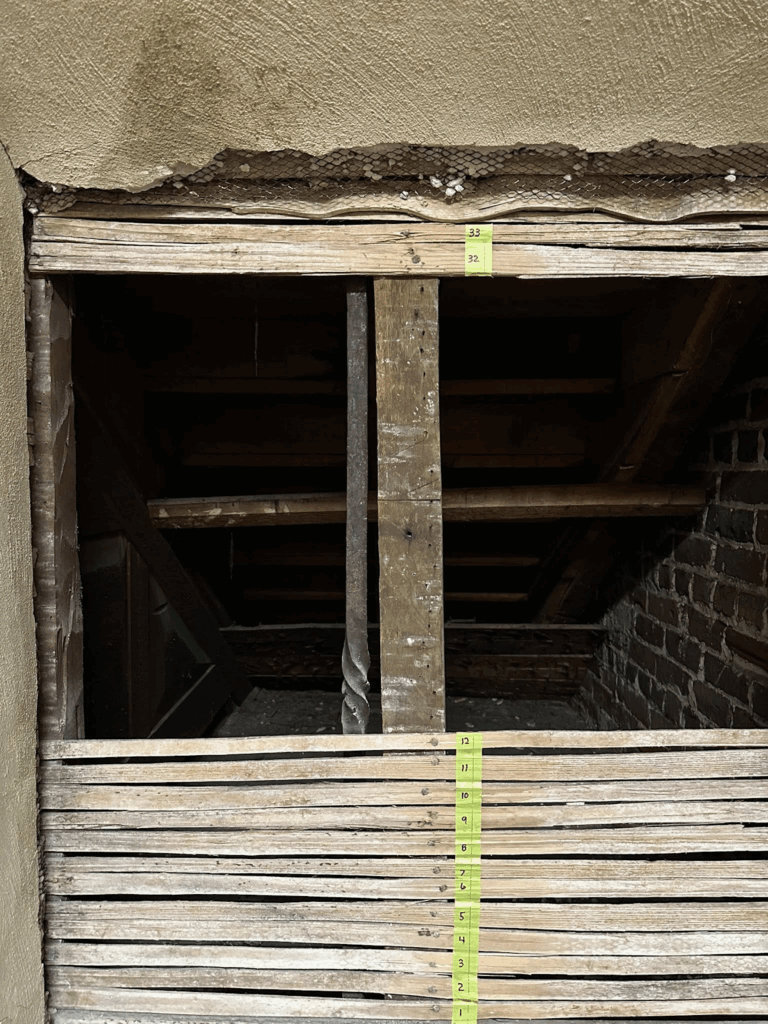
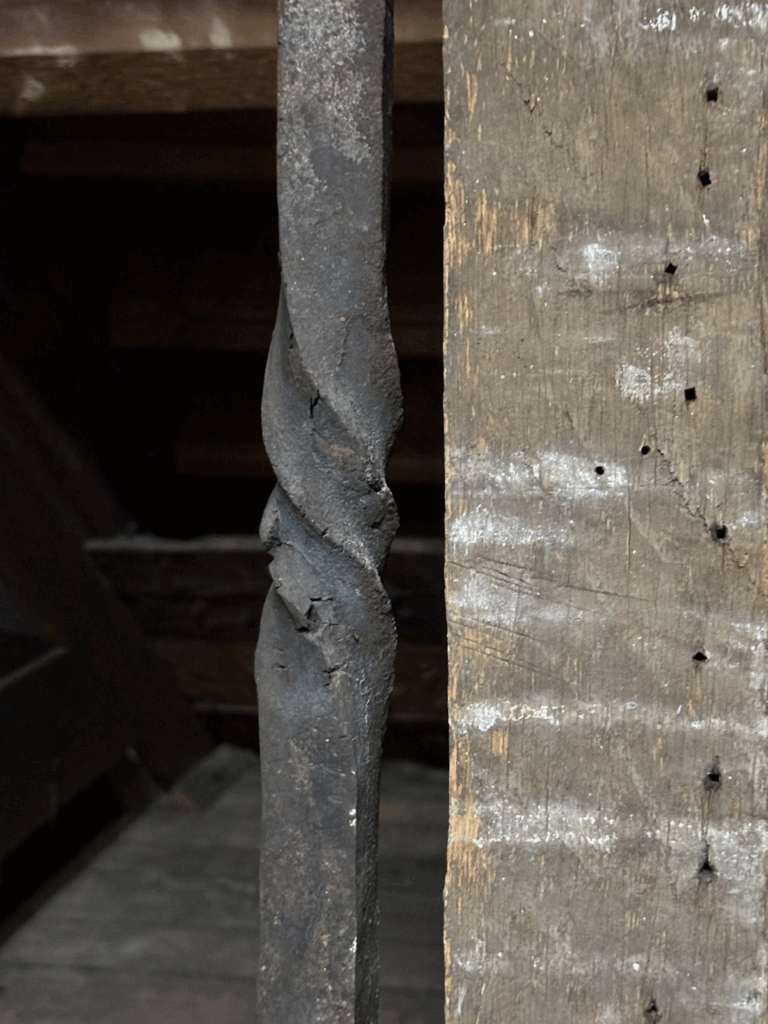
An entry into the account ledger Brice kept while building his house shows that he purchased a “barr under stair case.” Not seen for 251 years, the bar was recently discovered during preparations for conditioning the house. Modern plaster on wire mesh lath was removed from the under stair knee wall to reveal original riven lath. In order to access the space behind the knee wall, the original lath was removed and numbered for reinstallation. The iron “barr” was discovered during this process. There is still some discussion amongst the crew as to why the barr was twisted. Any guesses?
September 18, 2025
This main stair stringer was used for a little 18th century ciphering before being reused in the construction of the stair. It was discovered at the same time the iron “barr” was found. Unfortunately, we cannot make out the math problem it represents.
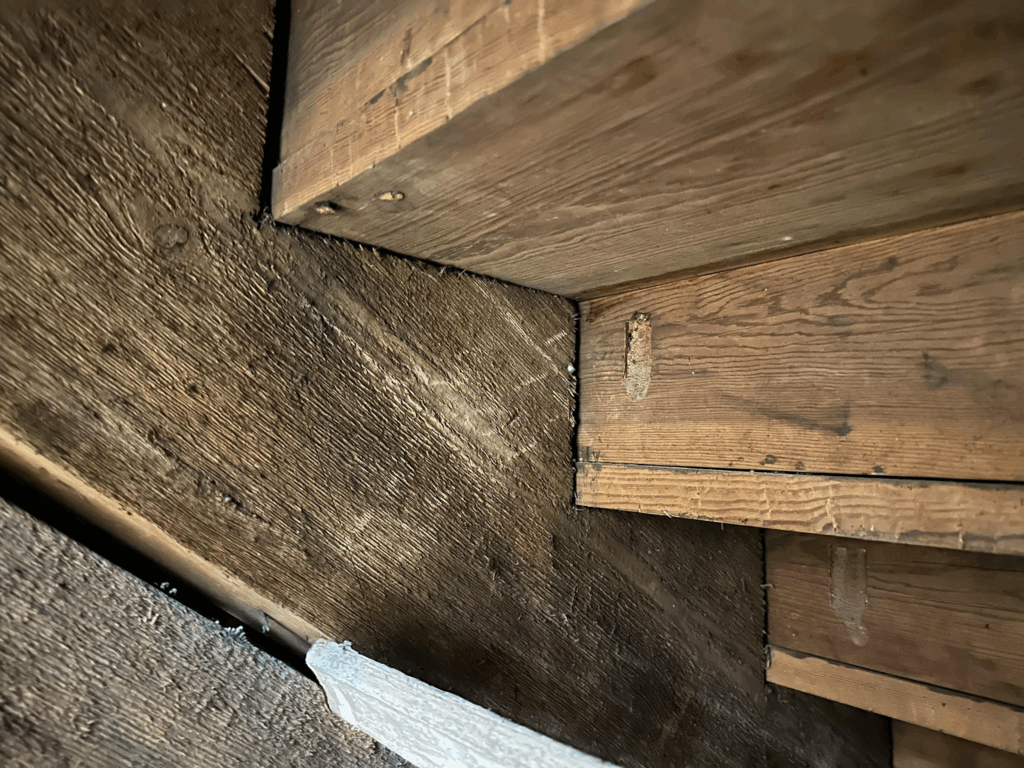
The discoveries made during this period highlight the value of careful restoration work and the layers of history embedded within the Brice House. Uncovering original structural elements provides meaningful insight into the building’s earliest construction and the people who shaped it in the 18th century.
More updates will be shared as new research, preservation work, and discoveries continue to unfold.
Learn more about the history and restoration of the James Brice House.