celebrating preservation and historic architecture
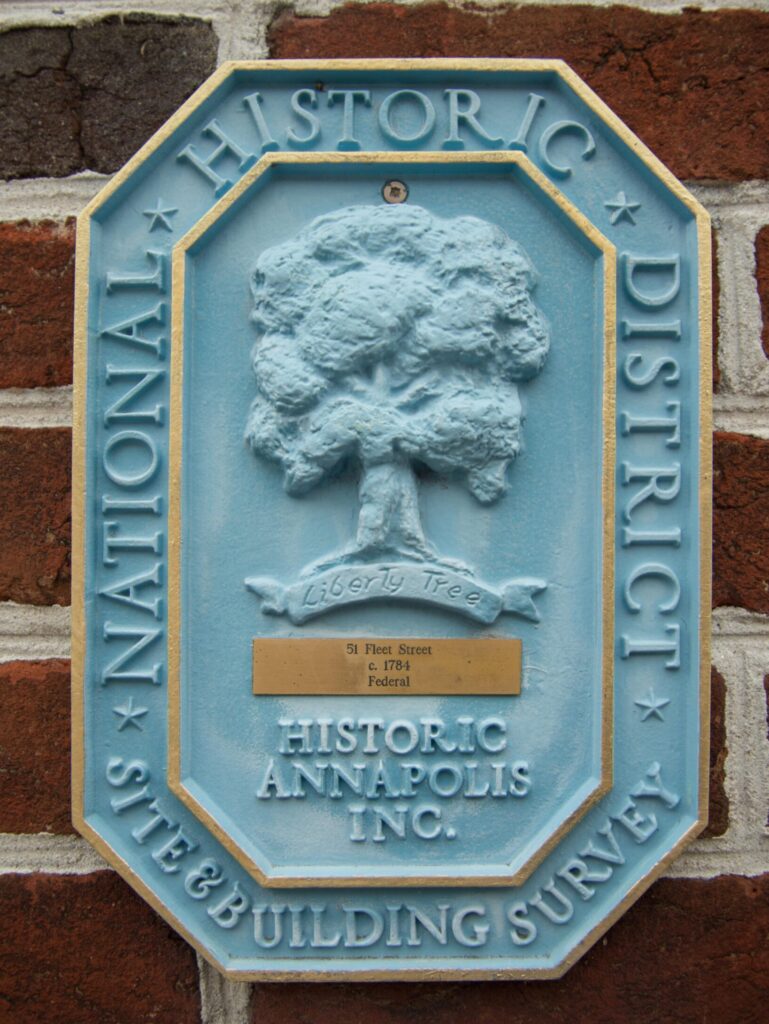
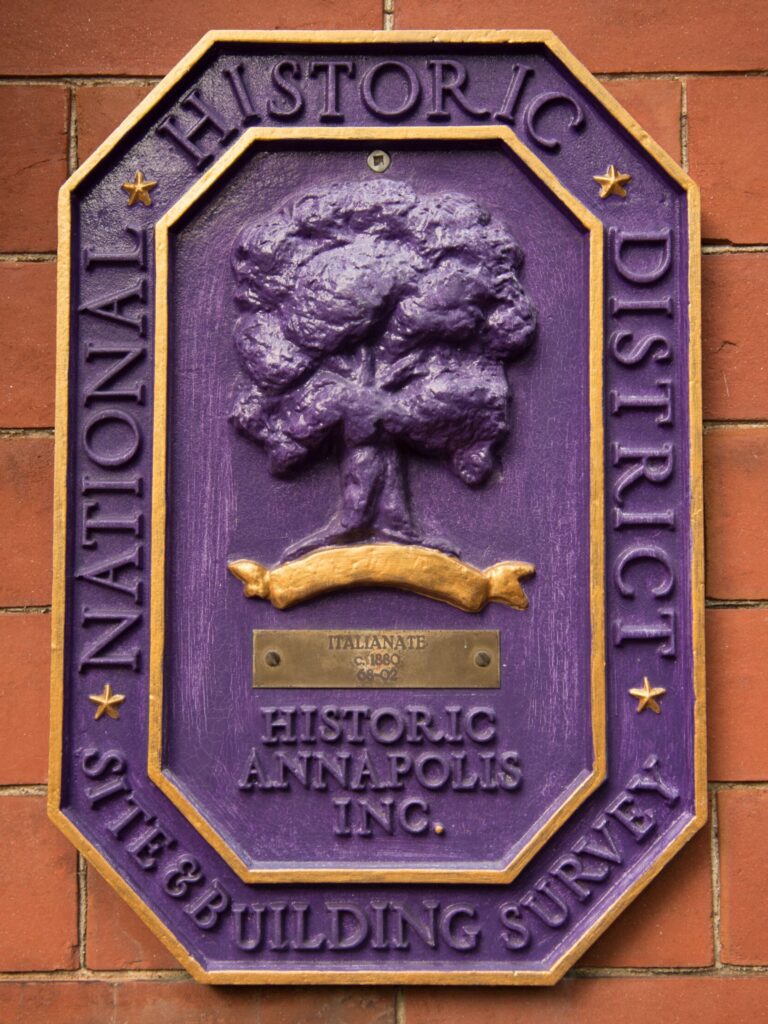
Fifty years ago, Historic Annapolis began honoring good stewards to our community with Historic Building Markers. These octagonal markers have become an icon of the Annapolis Historic District. While highlighting preserved buildings, these markers also tell residents and visitors more about the property on which they are displayed. A color-coded system is used to signify different architectural periods, while a brass inset displays the building name, date of construction, and architectural style, which can be found below. Annapolis now features over 300 properties with a historic marker!
Historic Marker Benefits
We encourage all eligible property owners to join our program! Not only will you become part of an exclusive group of property owners, but for a one time cost, you will also receive the following:
A complimentary Historic Annapolis membership at the $250 level for one year
Public recognition for your good stewardship to the City of Annapolis
Downtown businesses receive recognition and increased visibility through the program, while homeowners often experience benefits should they sell their property. There are no restrictions placed on the property.
How do I get a Historic Marker for my property?
If you’re interested, or not sure if you are eligible for a traditional or little marker, please email preserve@annapolis.org.
LITTLE MARKER PROGRAM
NEW! The Little Marker Program celebrates the architecture and preservation of buildings outside the Annapolis National Historic Landmark District, that are still within Annapolis city limits. If you interested in learning about this program, please email preserve@annapolis.org.
Guide to Marker Architectural Styles and periods
Red: Georgian Architecture (1715-1800)
The Georgian style is among the most long-lived styles of American architecture and dominated the English colonies for most of the 18th century. In 1700, the style emerged in the British colonies when an expanding and increasingly prosperous population began to seek more fashionable buildings.
Bronze: Georgian Buildings of National Importance (1730-1800)
Bronze markers indicate buildings of the Georgian style that are important on a national level for their architecture and role in the founding of America. Annapolis has a higher proportion of Georgian buildings than any other American city. The State House, William Paca House, James Brice House and Ridout Row are just a few of the excellent examples of these buildings with national importance.
Blue: Federal Architecture (1784-1840)
This style is often characterized as having a lightness and delicacy in comparison to its Georgian relatives. The exteriors have few elaborations other than the fanlight and accentuated front door. However, elaborations sometimes occur in the form of roof-line balustrades, the use of a Palladian-style window over the main entrance, and the use of dormers, as well as the use of keystone lintels above windows with prominent sills.
Green: Greek Revival Architecture (1820-1860)
During and after the War of 1812, American affection for British influence diminished, which brought an increasing interest in classical building to the new nation, including Annapolis. In Annapolis, the style is evident on many domestic structures: large square or elongated windows, restrained ornament, and pedimented or simple entablatured entrances.
Purple: Victorian Era Architecture (1869-1901)
This marker designates a wide range of architectural styles that share such elaborate massing and detail: French Second Empire, Italianate, Queen Anne, Gothic Revival, and Romanesque. Exterior decoration in the brickwork, multiple-hued color scheme, towers, elaborate brackets and consoles, arched and bay windows, as well as verandas exemplify some defining features of the architectural styles of the Victorian era.
Gray: 19th-20th Century Annapolis Vernacular Architecture (1837-1921)
This style employs simplified classical, Federal, and Italianate motifs. They are sometimes row or paired houses and reflect local culture and building materials. Vernacular Annapolis structures, such as those on Conduit and Market Streets, are ubiquitous throughout the city and contribute significantly to the streetscape and character of the town.
Yellow: 20th Century Distinctive Architecture (1901-1938)
20th century distinctive architecture represents a variety of styles ranging from the Beaux Arts, Colonial and Tudor Revival, and Craftsman styles, those mentioned being more commonly found in Annapolis. The American Foursquare is an example of this style and common in Maryland during this time period, and can be found on Duke of Gloucester Street.
HYBRID: Combination Of Styles (Various Time Periods)
Hybrid markers commemorate unique properties that feature more than one architectural style. For example, this marker designates that the property features elements of both the Georgian and Federal era styles.